September 16, 2026
Blog Details
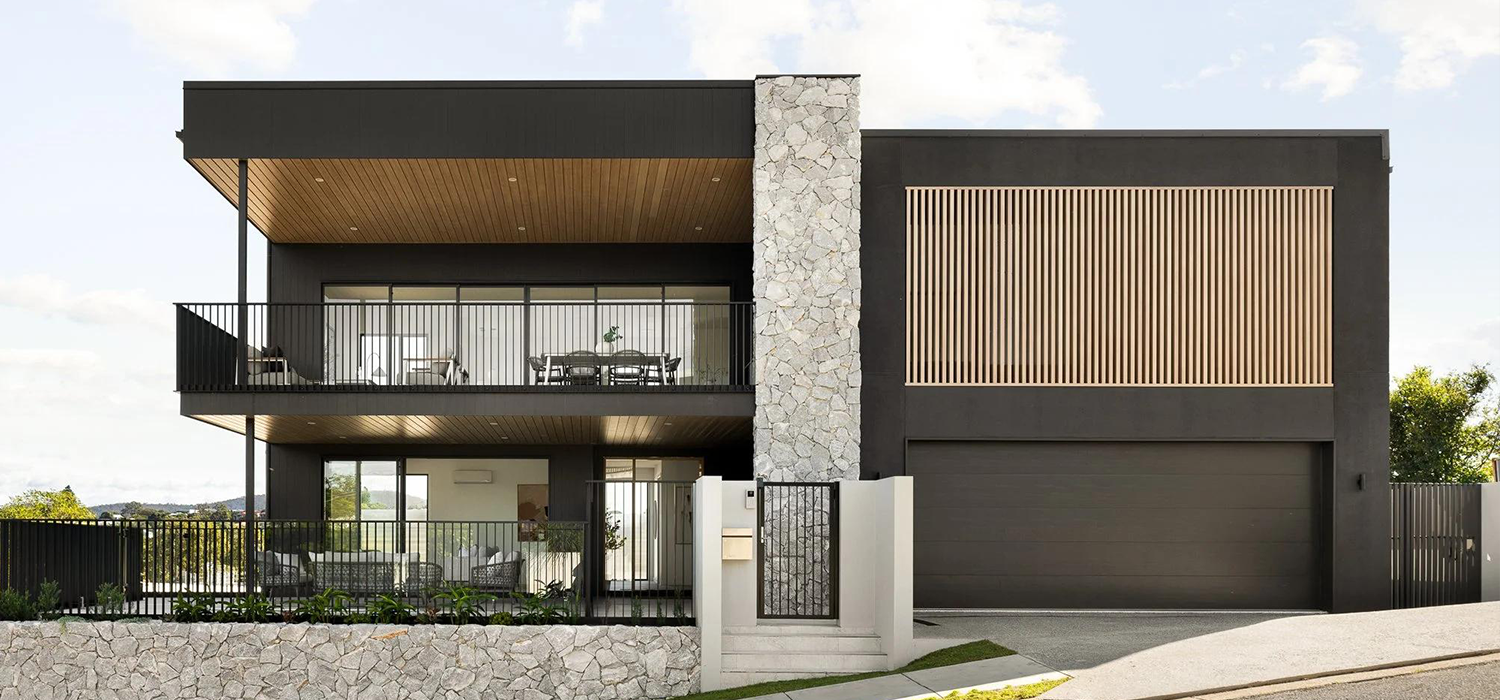
The face of a building says a lot before anyone steps inside it. In 2026, exterior façade design is moving away from purely decorative cladding toward surfaces that perform — resisting weather, cutting maintenance, and still looking sculptural from the street. Architects and homeowners alike are rethinking what a façade needs to do, and the materials, colours, and textures they're reaching for reflect that shift. Here's a look at where exterior design is headed this year.
1. Materials: Performance Meets Design Freedom
Compact and High-Pressure Laminates for Exteriors
- One of the biggest shifts in façade design is the rise of exterior-grade compact laminates. Unlike traditional cladding options, these are engineered to withstand UV exposure, rain, humidity, and temperature swings without warping, fading, or peeling. Because they're manufactured in sheet form, they also allow for large, seamless panels with clean joints — a look that fits the minimalist architecture dominating 2026.
- Compact laminates give architects a rare combination: the durability of industrial-grade material with the visual flexibility of decorative surfaces — stone, concrete, and wood finishes, all without the weight or upkeep of the real thing.
Natural Stone and Textured Concrete — Reimagined
- Stone and concrete remain façade staples, but 2026 is seeing them replicated more convincingly in engineered materials. Rather than sourcing heavy natural stone, many projects are using lightweight panels with deep, tactile stone-like textures — cutting structural load and installation time while keeping the aesthetic.
Metal Accents and Mixed-Material Cladding
- Brushed metal, anodised aluminium, and matte-finish steel are being layered with laminate or wood-textured panels to break up large façades. This mixed-material approach adds depth and prevents exteriors from looking flat or monotonous, especially on larger commercial and residential blocks.
Wood-Look, Not Real Wood
- Timber warmth continues to be one of the most requested façade looks — but real wood on an exterior means constant sealing, staining, and repair. In 2026, wood-textured laminate and cladding panels are replacing real timber almost entirely on street-facing surfaces, delivering the grain, tone, and warmth of wood while standing up to sun, rain, and pests without the maintenance cycle.
2. Colours: Earthy, Confident, and Quietly Bold
Warm Neutrals Take the Lead
Beige, sand, taupe, and warm greige tones are dominating 2026 façades. These shades feel grounded and timeless, pair well with greenery, and — practically speaking — hide dust and weathering far better than stark white.
Deep, Grounded Tones
Charcoal, deep olive, rust, and espresso browns are being used as anchor colours on entryways, base panels, or accent bands. These darker tones add gravity to a façade and work particularly well combined with lighter stone or laminate textures above them.
Muted, Not Muted-Down: Statement Colour in Small Doses
Rather than full-façade colour, 2026 designs favour a single confident colour — a burnt orange door surround, a deep blue panel, a terracotta accent wall — used sparingly against neutral backdrops. It's a controlled way to add personality without overwhelming the architecture.
Monochrome Layering
A single colour family used across multiple materials and finishes — matte concrete, glossy laminate trim, and textured stone all in variations of grey, for instance — is a popular way to create depth without introducing colour contrast.
3. Textures: Where Façades Get Their Character
Matte Over Glossy
- While high-gloss finishes had their moment, 2026 leans strongly toward matte and low-sheen textures. Matte surfaces read as more sophisticated, hide fingerprints and water spots better on exteriors, and photograph beautifully in natural light without harsh glare.
Fine Wood Grain and Linear Textures
- Subtle, fine wood-grain textures — rather than heavy, exaggerated grain patterns — are trending for a refined, contemporary look. Vertical linear textures are also being used deliberately to make building elevations appear taller and sleeker.
Stone and Slate Embossing
- Textured panels that replicate the irregular, tactile feel of natural stone or slate are increasingly popular for base cladding and accent walls, giving façades a grounded, natural feel without the cost or weight of quarried material.
Anti-Fingerprint, Weather-Resistant Finishes
- Texture in 2026 isn't just about looks — it's functional. Anti-fingerprint and anti-glare surface finishes are being specified more often for exteriors, keeping panels looking clean despite constant exposure to touch, dust, and weather.
Why Material Choice Matters More Than Ever
A façade trend only works long-term if the material behind it holds up. This is where the shift toward high-performance decorative surfaces really shows its value — panels that are scratch-resistant, weather-resistant, and low-maintenance let designers commit to bold textures and finishes without worrying about how they'll age five or ten years down the line.
This is exactly the space where a manufacturer with a wide design library — spanning wood, stone, metallic, and matte textures across durable laminate sheets — becomes useful to architects translating these 2026 trends into real buildings. With hundreds of texture and design options to choose from, it's possible to specify an exterior look — whether warm wood tones, deep stone textures, or a confident accent colour — without compromising on durability.
A Global Design Language
Façade trends today rarely stay confined to one region — a warm wood-look panel or a matte stone-textured finish specified in Mumbai can just as easily show up on a project in Dubai, São Paulo, or Amsterdam. This is one of the reasons manufacturers with international reach matter to architects working across borders: the same design library, colour consistency, and quality standard need to travel with the project.
VIR Laminate exports its range of decorative and exterior-grade laminates to countries across North America, Latin America, Europe, the Middle East, Africa, and Asia-Pacific, including:
United States, Canada, Mexico, Puerto Rico, Dominican Republic, Nicaragua, Guatemala, Honduras, El Salvador, Chile, Peru, Venezuela, Brazil, Portugal, Spain, Romania, Slovakia, Bulgaria, Kosovo, Serbia, Italy, Turkey, Greece, Latvia, Switzerland, Netherlands, Australia, Tunisia, Cameroon, Egypt, Russia, Uzbekistan, Palestine, Bahrain, Bangladesh, Brunei, China, Côte d'Ivoire, Fiji, Hong Kong, Indonesia, Iran, Iraq, Ireland, Israel, Jordan, Korea, Kuwait, Malawi, Malaysia, Nepal, Oman, Philippines, Qatar, Saudi Arabia, Senegal, Singapore, Sudan, Syria, Thailand, UAE, Vietnam, and Yemen.
This global footprint means the same 2026 façade trends — earthy neutral tones, matte wood textures, stone-look panels — can be specified consistently, whether the project is a single home or a multi-country commercial rollout.


